The Permanent Exhibition

Experience
history

A tour through historic workshops, shops and life stories from the Weser Marshes, in a townhouse of 1773. Follow the golden thread.

Your tour

Five chapters, one golden thread.

Our permanent exhibition links historic craft and village life across several buildings into a vivid picture of past centuries. Move over a chapter to look inside, and follow the thread through the whole house.

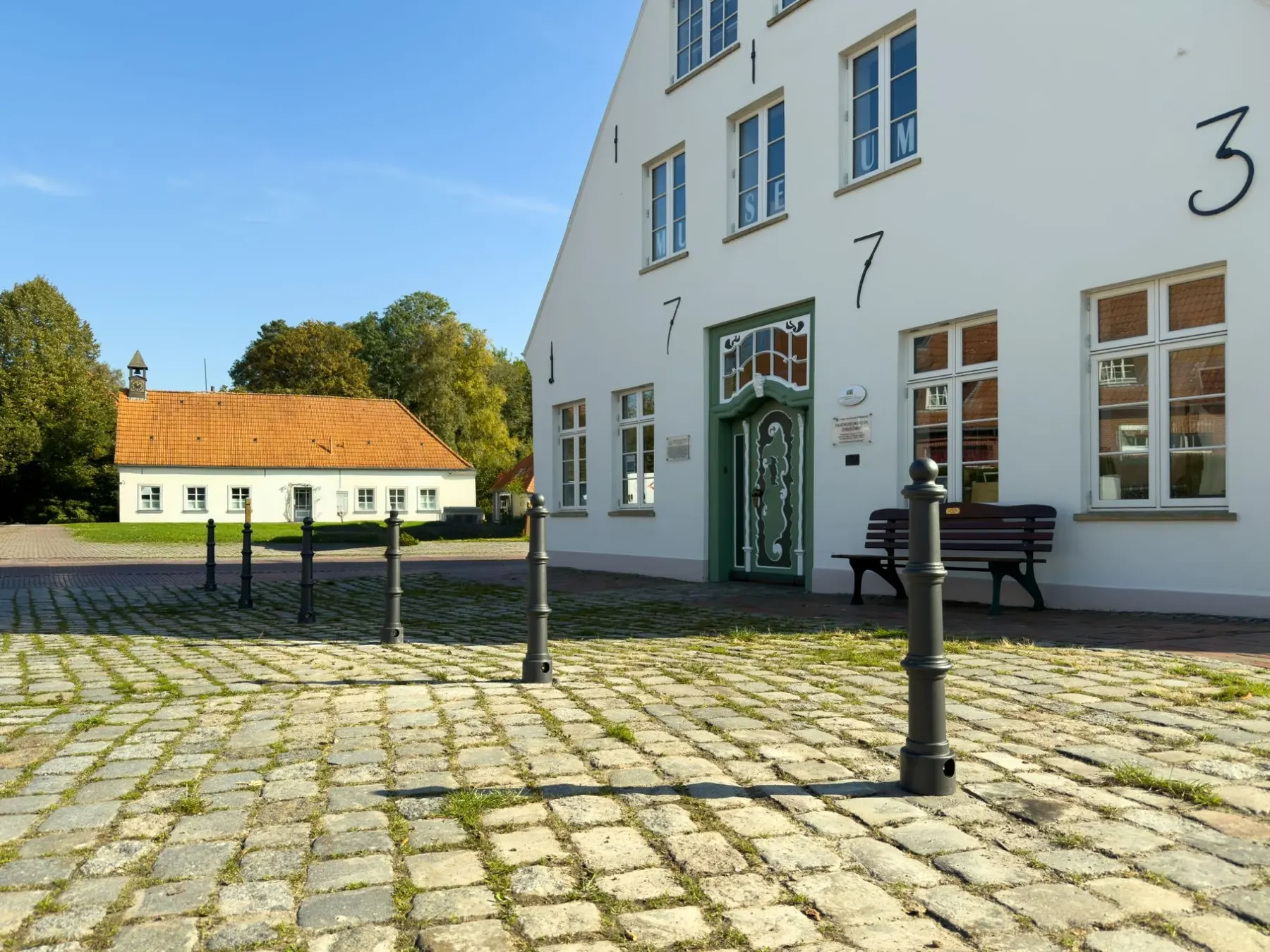
The restored green Rococo door of the main building of 1773
New in the collection

The Rococo Door

The historic entrance door of our main building of 1773 has returned. After extensive restoration, the precious original shines in new splendour, one of the most significant pieces in our collection.

Ground floor, in the corridor: from the entrance to the back door

Show on the plan
Chapter 01Ground floor6 stationsThread: Trader's twine

Trade& Health

Pharmacy, medicine, grocery store and barber: everyday life on the historic ground floor.

Historic pharmacy with storage jars and scales
Historic medical instruments
Historic grocery store
Historic barber's salon
Model of the medieval castle of Ovelgönne
Reconstructed historic jail
Station 01.1The Burg PharmacyGround floor, behind the till
You are hereGround floor
01.1Station

The Burg Pharmacy

Step into the world of fine fragrances and historic healing arts. The faithful reconstruction is furnished with original fittings from the Laer family pharmacy. Original glass jars, antique scales and mortars bring a historic dispensary vividly to life.

Ground floor, behind the till

Show on the plan
01.2Station

Medicine & Dentistry

Historic dentist chairs, delicate surgical instruments and the equipment of a country doctor from the 19th and 20th centuries tell of a time when healthcare looked very different.

Ground floor, in the corridor

Show on the plan
01.3Station

The Grocery Store

From loose sugar to rough bar soap, our shop shows the regional retail trade before the era of modern supermarkets. Historic shelves, scales and nostalgic advertising signs are waiting for you.

Ground floor, opposite the pharmacy

Show on the plan
01.4Station

The Barber's Salon

In rural communities the barber was not only responsible for cutting hair but often also served as a bath-keeper and tooth-puller. Historic hair dryers and fine shaving tools await you in this carefully recreated space.

Ground floor, immediately left of the entrance

Show on the plan
01.5Station

Ovelgönne Castle & Archaeology

Historic finds, archaeological objects and documents tell of the medieval castle fortification. A scale model in the museum garden rounds out the picture of what once shaped life in this region.

Ground floor, in the corridor

Also in the museum gardenA miniature replica of the castle also stands in the museum garden.

01.6Station

The Historic Jail

The reconstructed historic jail gives a sobering glimpse into the conditions of imprisonment in centuries past, and reminds us how differently law and punishment were once interpreted.

Ground floor, in the corridor

Show on the plan
Original pharmacy storage jars made of mouth-blown glass
Collection objectc. 1870 to 1920
Storage jars of mouth-blown glass from the holdings of the Burg Pharmacy. Every jar hand-lettered, every label unique.
To the pharmacy on the plan
Chapter 02House and courtyard7 stationsThread: Chalk line

Craft& Building

Blacksmith, wall painting, thatching, textiles, wheelwright: the craft foundations of village life.

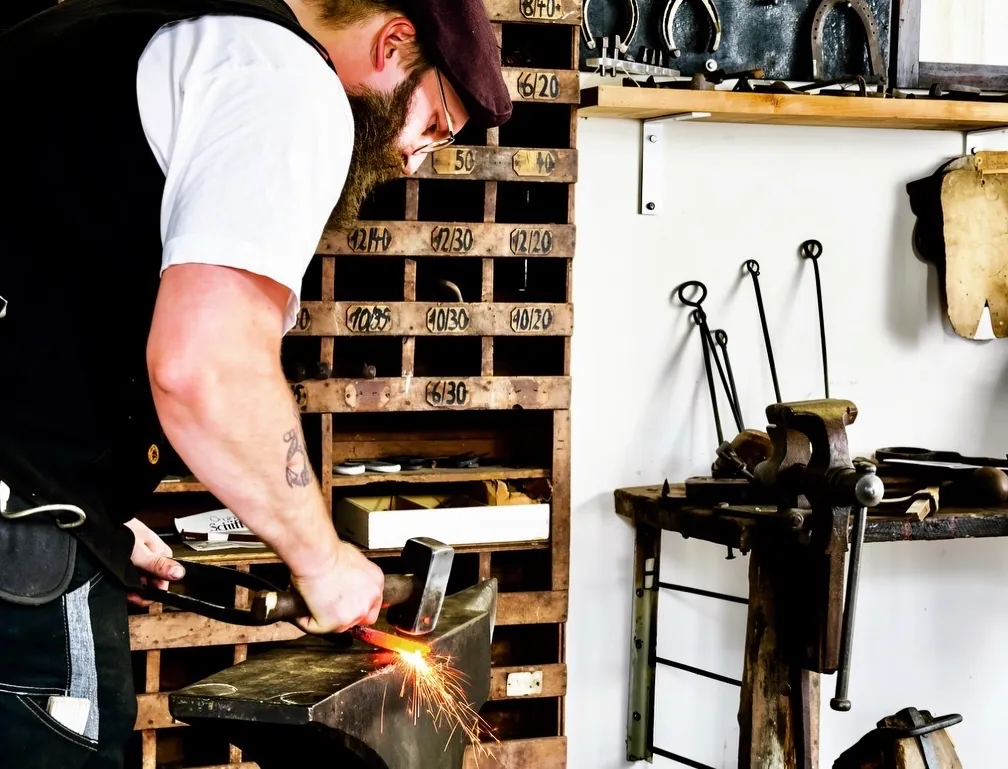
Blacksmith at the anvil of the historic smithy
Historic painter's craft
Tools for thatching
Exhibition room for textiles and leatherwork: tailor's dummy in a red velvet cape in front of the wall with historic photographs
Historic workshop machine in the wheelwright's workshop
Historic joinery with a model of a roof truss
Historic guild signs
Station 02.1The Old Blacksmith'sAnnex, between the wheelwright's workshop and the special exhibition room
You are hereCourtyard and garden
02.1Station

The Old Blacksmith's

In our outdoor area, a fully equipped and functional historic smithy awaits. On our event days the iron is made hot once more and the craft is demonstrated before your eyes.

Annex, between the wheelwright's workshop and the special exhibition room

Show on the plan
02.2Station

Wall Decoration & Painting

Elaborate wall paintings, delicate stencilling techniques and specialist tools of the painter's trade tell of design trends from past eras in the Weser Marshes region.

Upper floor, Craft & Building area, door at the end of the corridor

Show on the plan
02.3Station

Thatching

The traditional art of thatching continues to shape the landscape of the Weser Marshes to this day. We show you the specific tools, refined techniques and natural materials of this ancient and weatherproof craft.

Upper floor, Craft & Building area, door at the end of the corridor

Show on the plan
02.4Station

Textiles & Leatherwork

Old spinning wheels, leather tools and finished goods show how laborious and time-consuming the making of clothing and everyday objects once was, from the cobbler to the fine weaver.

Ground floor, immediately right of the entrance

Show on the plan
02.5Station

The Wheelwright's Workshop

Currently being completely redesigned

In an annex to the museum, our wheelwright's workshop shows how craftspeople once built carts, wagons and wheels for rural commerce. Specialised tools make clear the precision this craft demanded.

Annex, next to the smithy

Show on the plan
02.6Station

Joinery & Timber Framing

From the finely crafted piece of furniture to the load-bearing roof beam: the upper floor displays the diversity of wood-working trades in tools and sample pieces of the highest craftsmanship.

Upper floor, Craft & Building area, door at the end of the corridor

Show on the plan
02.7Station

The Guild Corner

Historic insignia, certificates and emblems from various trades across the Weser Marshes region offer an insight into the organised craft life of centuries past.

Upper floor, in the corridor, straight ahead from the staircase

Show on the plan
People behind the craft
Historic black-and-white photograph: three women sewing at a table with sewing machines, among them master tailor Elisabeth Mittwollen with her employees
Elisabeth Mittwollen with employees sewing 1950s/60s · Photo: HMO Archive collection

Master tailor · 1911–1996

Elisabeth Mittwollen

Elisabeth Mittwollen from Brake began a tailoring apprenticeship at the age of 14, passed her master's examination in 1935 and ran her business into the 1980s. For her work she received the Golden Master Certificate and the Honorary Master Certificate.

Read the full story

A master of the tailor's craft. Born on 9 November 1911 in Brake, Elisabeth Mittwollen earned wide recognition as a master tailor for her excellent and unique creations. Her skill in making high-quality, extraordinary garments won her great respect not only locally but also beyond the region, for instance at the Oldenburg Press Ball in 1965. For her outstanding achievements she was honoured with the Golden Master Certificate and the Honorary Master Certificate.

Elisabeth began her career at the age of 14 with a tailoring apprenticeship under Johanna Bahlmann. After passing her journeyman's examination in 1929, she soon founded her own tailoring business. In 1935 she reached another milestone when she passed the master's examination. Despite personal challenges, such as a childhood illness that limited her mobility and raising her son as a single mother, Elisabeth showed extraordinary strength and creativity.

During and after the Second World War she adapted to changing fashions and passed on her knowledge in sewing courses, showing how to stay stylish even in times of scarcity. With persistence and expertise she successfully ran her tailoring business into the 1980s, helping to promote and pass on the tailor's craft to future generations.

Elisabeth Mittwollen died on 15 November 1996, but her legacy lives on. She remains a source of inspiration who greatly influenced both fashion and the role of women in the crafts. This exhibition honours Elisabeth Mittwollen's exemplary contribution to fashion history and her role as a pioneer of women's emancipation in the crafts.

Historic black-and-white photograph: shoemaker Gerhard Martens sits at his workbench in his workshop, repairing a shoe
Gerhard Martens in his workshop in Rönnelmoor, repairing a shoe 1960s · Photo: HMO Archive collection

Shoemaker · 1886–1978

Gerhard Martens

Gerhard Martens from Rönnelmoor made and repaired shoes in his own workshop for more than 80 years. His workbench can be seen in the permanent exhibition.

Read the full story

Shoemaking is one of the oldest crafts and has a long tradition in Germany. In small workshops, shoemakers used manual skill and simple tools to make shoes that suited the individual needs of their customers. Gerhard Martens (1886–1978) from Rönnelmoor was such a craftsman. For more than 80 years he made and repaired shoes in his own workshop. His workplace consisted of a low workbench, a stool and basic tools such as awls, a cobbler's hammer and a cobbler's knife. To work more efficiently, Martens also used technical aids such as a grindstone and a shoemaker's sewing machine. This combination of traditional handwork and technical innovation shows how the craft adapted to the demands of its time.

In times without electric light, craftspeople needed creative solutions to work in poor light. The Schusterkugel (cobbler's globe) is an impressive example of such inventiveness. It is a glass sphere filled with water that bundles the light of candles or oil lamps and directs it onto the workplace. This allowed shoemakers to do precise work in the evening hours or on dark days. The use of materials such as glass, leather, wood and metal shows the versatile skill of the time.

Making shoes to measure demands the highest precision. Gerhard Martens transferred the outlines of shoe soles in pencil directly onto hard cowhide. These templates were the basis for cutting the soles exactly and made sure that every shoe fitted the wearer's foot perfectly. This practice shows the high standard of quality and individuality in the traditional shoemaker's craft.

More about the Schusterkugel
Chapter 03Upper floor3 stationsThread: Kitchen twine

Food& Home

Bakery, butcher's shop, kitchen: the world of food, cooking and domestic work.

Historic bakehouse
Historic butcher's shop
Historic kitchen and household equipment
Station 03.1Bakery & ConfectioneryUpper floor, back left, through the Craft & Building area
You are hereUpper floor
03.1Station

Bakery & Confectionery

Our bakehouse shows the heavy work of bakers before the age of large machines. From the heavy flour sack to the wooden peel, everything is preserved in its original state.

Upper floor, back left, through the Craft & Building area

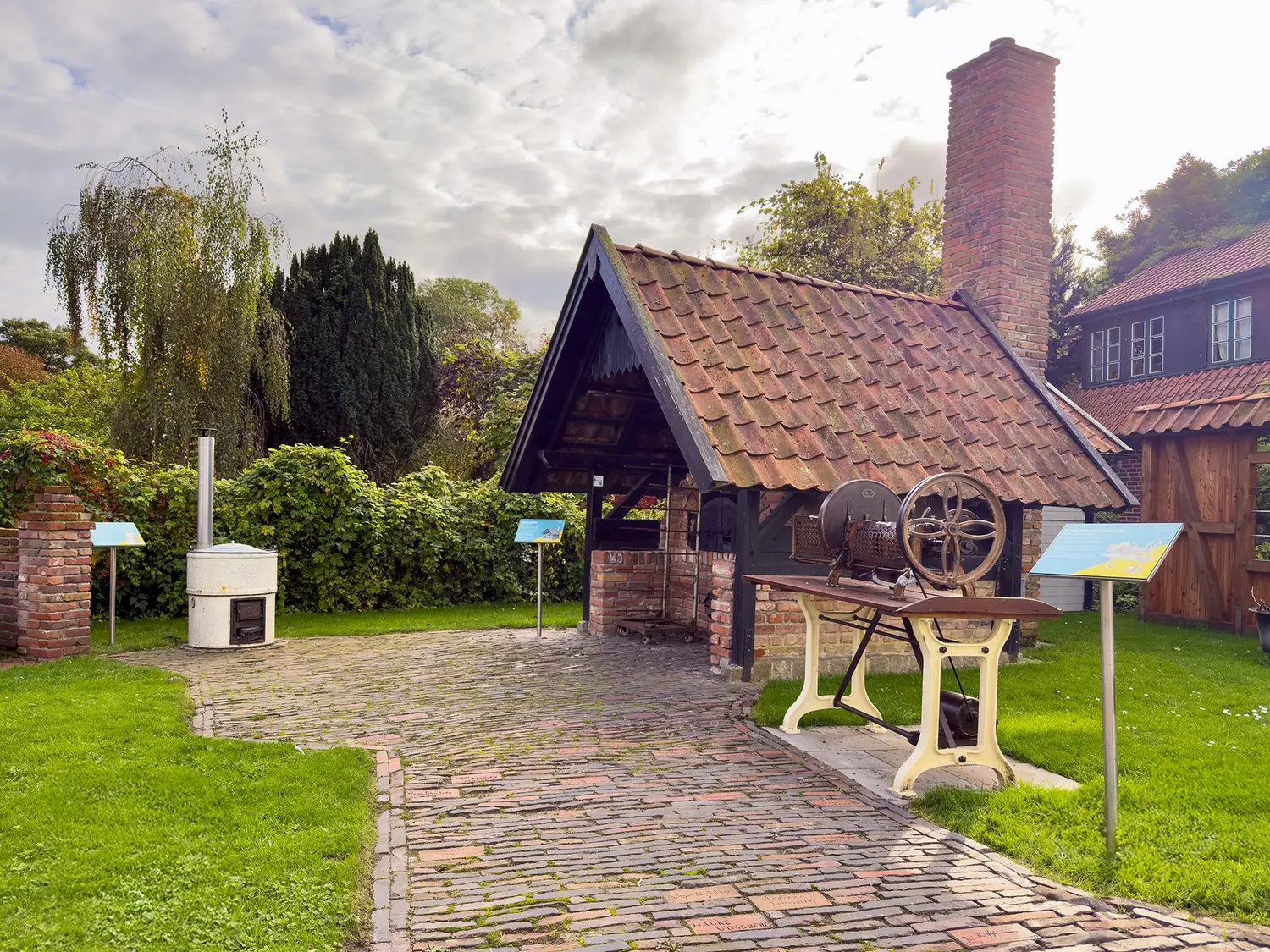
Also in the museum gardenAnother part of the bakery is in the museum garden, with large machines and the bread oven.

03.2Station

Butcher's Shop

Historic sausage fillers, butcher's knives and the equipment of a classic slaughterhouse tell of home slaughtering and professional meat processing in the region.

Upper floor, back left, through the Craft & Building area

Show on the plan
03.3Station

Kitchen & Household

Heavy equipment, cast-iron pots and coarse textiles illustrate the hard working day in the historic household, from cooking over an open fire to the time-consuming care of laundry.

Upper floor, back left, through the Craft & Building area

Show on the plan
Two people at the brick bread oven in the museum garden
In the museum garden18th century, reconstructed
The reconstructed bread oven in the museum garden. Here craft is not only shown but lived.
To the garden on the plan
Chapter 04Upper floor5 stationsThread: Staff line

Culture& People

Singer's Room, photography, watchmaking, Bakelite: the cultural life and the people who shaped Ovelgönne.

The Singer's Room with historic furnishings
Historic cameras
Historic clocks
Electrical installation and a hairdryer made of Bakelite on a wall, beside a display case with plugs, switches and an advertisement from 1952
Black-and-white photograph: women and men in front of the Rococo door
Station 04.1The Singer's RoomUpper floor, through the double door at the front
You are hereUpper floor
04.1Station

The Singer's Room

The Singer's Room honours significant historic personalities from the region and the men's choir, which shaped the social life of the community across generations.

Upper floor, through the double door at the front

Show on the plan
04.2Station

Photography & Optics

From the camera obscura to early analogue photography: historic cameras, developing equipment and optical instruments show how capturing moments was once a revolutionary art.

Upper floor, to the right of the corridor

Show on the plan
04.3Station

The Watchmaker's Workshop

Historic grandfather and pocket watches, delicate tools and the mechanisms with which craftspeople once built and repaired clockwork by hand. Watchmaking was a precision craft of the highest order.

Upper floor, right-hand wall in the corridor, between Photography & Optics and the Singer's Room

Show on the plan
04.4Station

Bakelite: Pioneers of Plastic

Household objects, casings and technical components made from Bakelite recall how a single material defined an entire era. The world's first fully synthetic plastic.

Upper floor, on the right-hand wall as you step into the corridor

Show on the plan
04.5Station

Ovelgönne's History

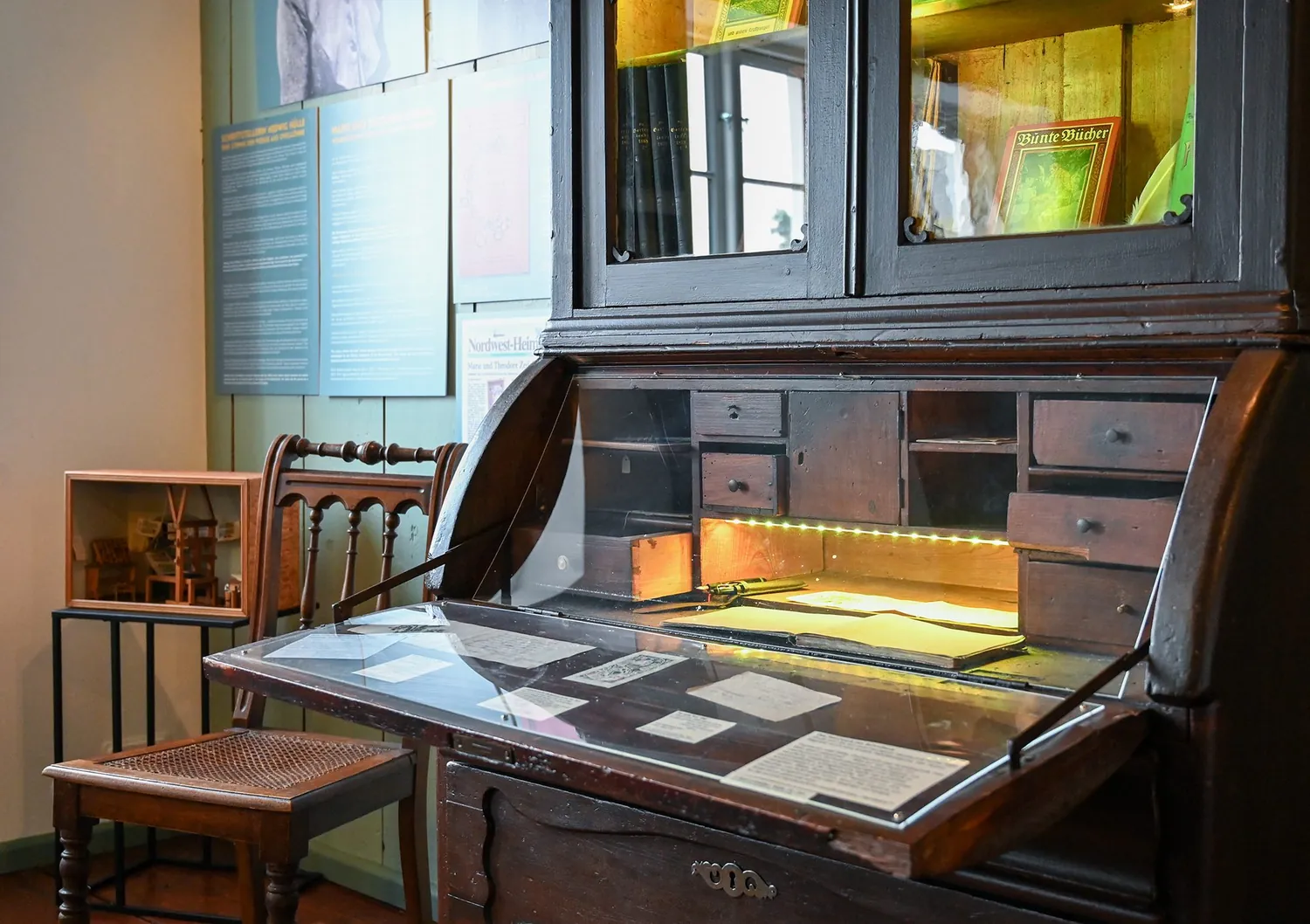
The social commitment of the Zedelius siblings, the artistic legacy of Wolfgang Heimbach and many other personalities have left their traces. Portraits and personal belongings bring history to life.

Upper floor, in the Singer's Room

Show on the plan
Personalities of Ovelgönne
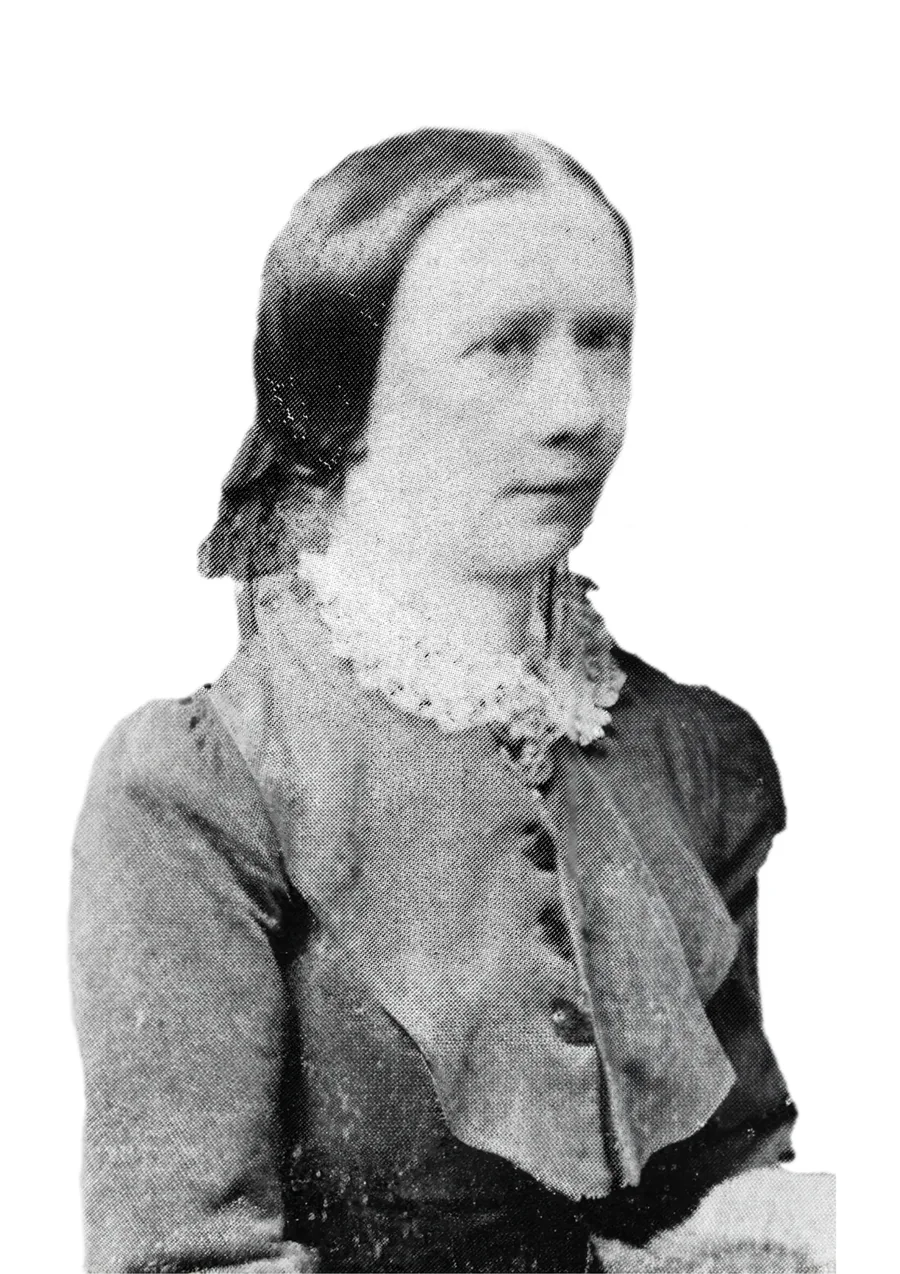
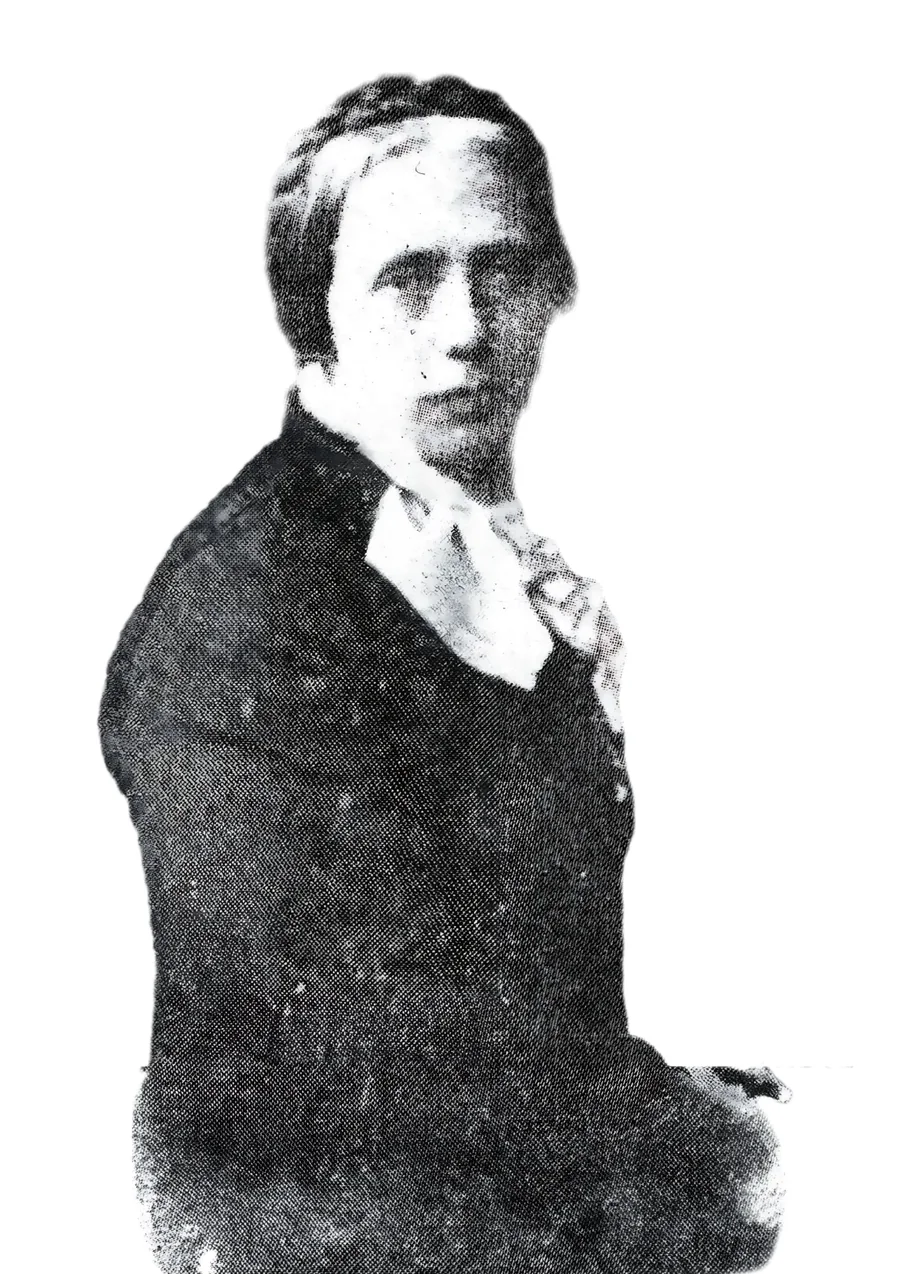
Historic black-and-white portrait of Marie Zedelius: a woman with parted hair, a lace collar and a high-necked dress Historic black-and-white portrait of Theodore Zedelius: a woman in a dark dress with a white collar, her hand at the collar
Marie on the left, Theodore Zedelius on the right · Photos: HMO Archive collection
Women writers

The Zedelius Sisters

In the 19th century, women writers usually published under pseudonyms in order to protect their reputation in middle-class society. Marie and Theodore Zedelius from Ovelgönne wrote under assumed names and became renowned Lower Saxon writers.

Marie Zedeliuswrote as F. L. Reimar27 February 1826, Ovelgönne, to 4 April 1892, Oldenburg

A writer since 1863, influenced by her mother and by Fanny Lewald. Her works appeared in well-known magazines such as “Die Gartenlaube” and stood out for their emancipatory approach and complex female characters.

Theodore Zedeliuswrote as Th. Justus25 January 1834 to 1 June 1905

Her works were shaped by a deep attachment to her homeland, the Weser Marshes. Theodore was politically and socially engaged and campaigned for women's rights and education.

Upper floor, in the Singer's Room

Show in the Singer's RoomDigital station in preparation
Baroque painter

Wolfgang Heimbach

A Baroque painter from Ovelgönne, deaf, widely travelled and long forgotten. He painted for princes, kings and a pope. We hold no originals of his paintings, so we trace his life in a digital station.

Born
probably around 1613 in Ovelgönne
Buried
1 May 1679 in Osnabrück
Patrons
Medici, Pope Innocent X, King Frederick III of Denmark

Upper floor, in the Singer's Room

Wolfgang HeimbachC. 1613 TO 1679
Digital stationEngraving after the self-portrait of 1660 in a Baroque frame. Own illustration.
Chapter 05House and garden3 stationsThread: Contour line

Nature, Technology& Heritage

Peat cutting, historic large machines and master certificates: the material foundations of life in the Weser Marshes.

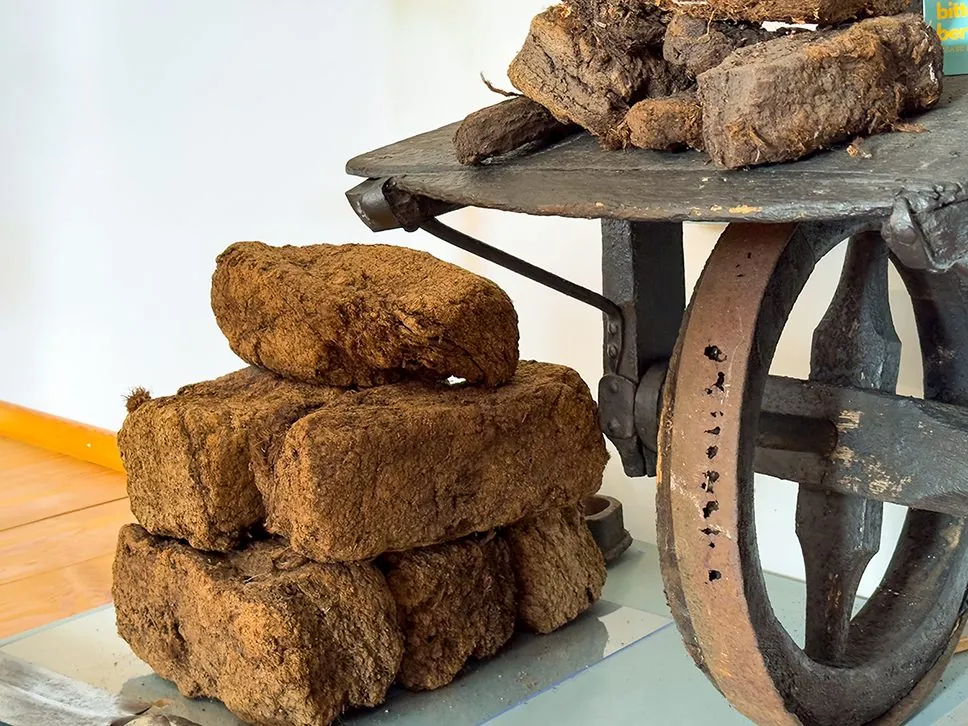
Historic tools for peat cutting
Historic large machines in the museum garden
Historic master certificates
Station 05.1Peat CuttingUpper floor, Craft & Building area, on the right
You are hereUpper floor
05.1Station

Peat Cutting

The "black gold" of the marshes. Old spades, wooden carts and stories around peat extraction show how laborious and yet essential this work was for survival and heating in the region.

Upper floor, Craft & Building area, on the right

Show on the plan
05.2Station

Historic Large Machines

In the museum garden, impressive historic agricultural machines are accessible under the open sky. These machines show powerfully how technology and craftsmanship transformed farming in the Weser Marshes.

Outdoor area behind the main building

Show on the plan
05.3Station

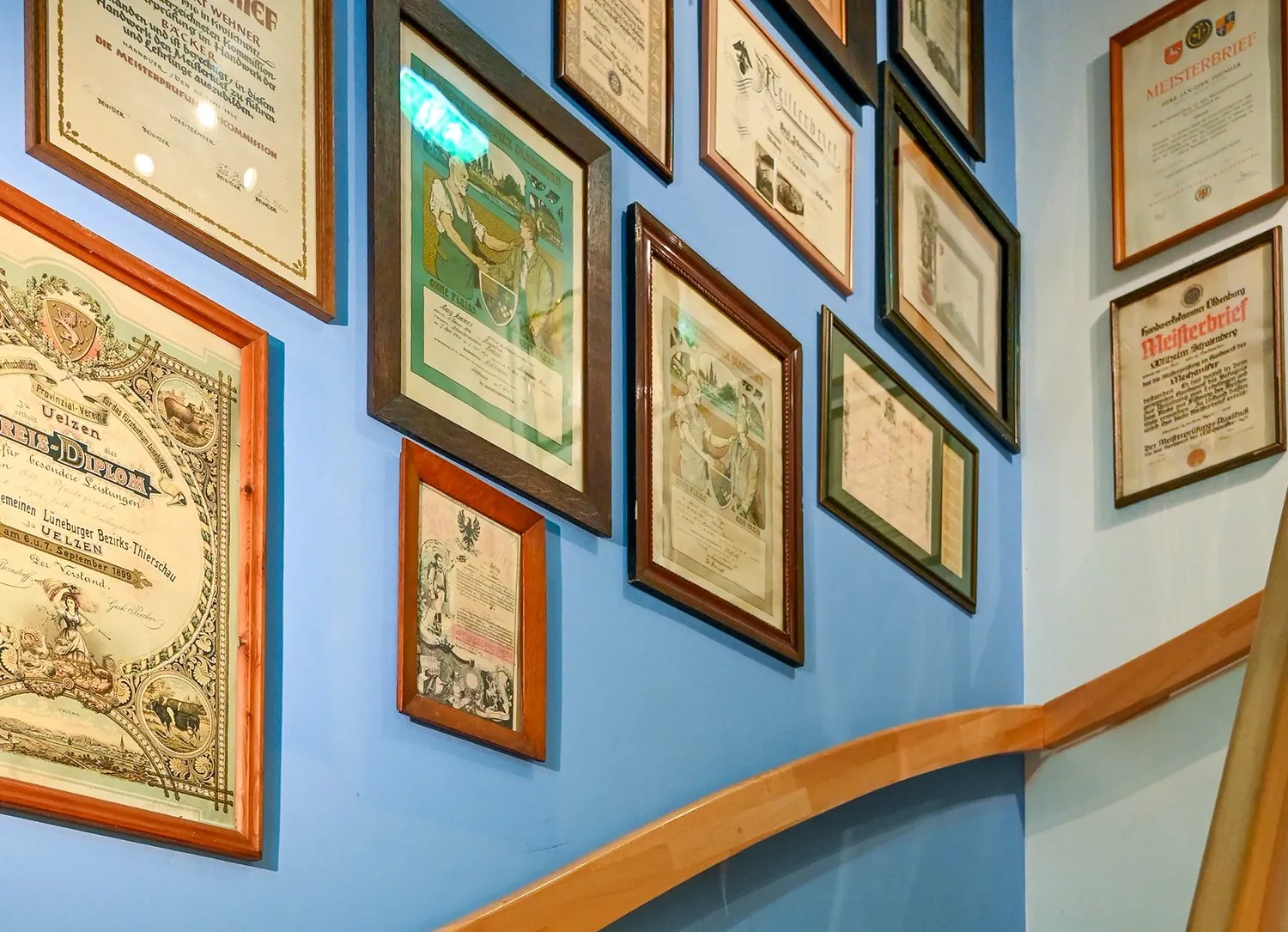
The Master Certificate Gallery

Elaborately designed historic master certificates from a wide variety of trades adorn the staircase. These testaments to the highest craftsmanship show the pride with which master's examinations were once passed.

Staircase, ground floor and upper floor

Show on the plan
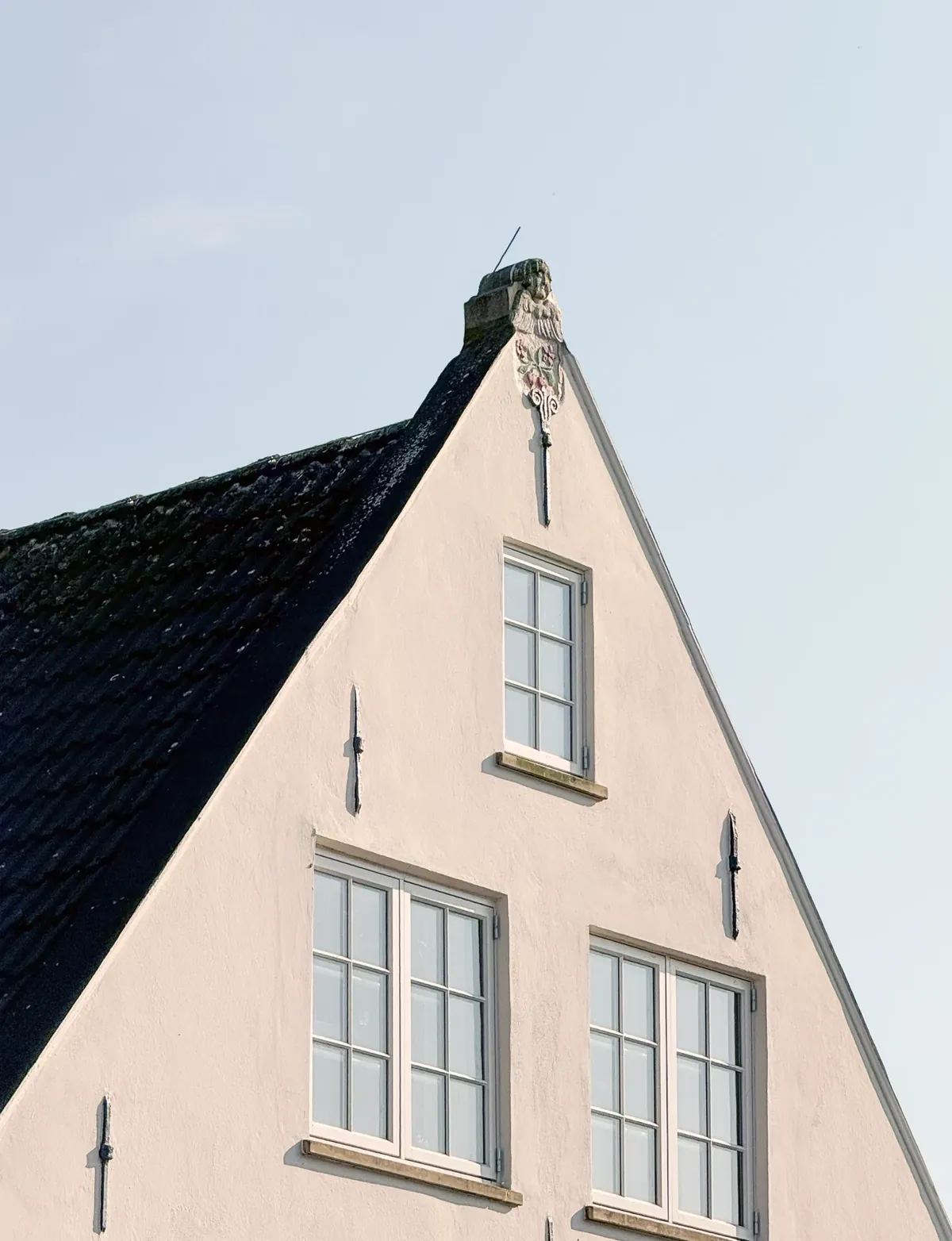
The historic townhouse of 1773
Collection object1773
The townhouse of Ovelgönne. For more than 250 years it has carried the stories of craft, community and life in the Weser Marshes.
Service

The Archive

The memory of the museum. Protected documents, old photographs and writings of inestimable value for academic research and genealogical research in the Weser Marshes are kept here.

Enquiries and data requests are welcome at any time. Working in the archive yourself is not possible for reasons of conservation, restoration, security and space.

The townhouse of 1773 in Ovelgönne seen from outside
Your visit

Experience it yourself!

This was only a glimpse of our large tour. Come by, breathe in the atmosphere of our house and discover many more rooms and stories in Ovelgönne.

Open
Every Sunday, 14:00 to 18:00
Admission
Adults €3, reduced €1
Address
Breite Straße 27, Ovelgönne